
Situations
Noise barrier and acoustic fence: which solution suits your situation?
Every noise source is different. So is every environment. That is why there is no universal noise barrier: the acoustic performance of a screen depends on the nature of the noise disturbance, the distance between the source and your space, the height of the panels, the materials chosen and the installation conditions.
At Akoustys, we design custom acoustic fences and noise barriers in PEFC-certified timber, with a high-density recycled polyurethane foam core. Each panel is designed to absorb or reflect sound waves effectively, while withstanding harsh weather and integrating into your environment.
- RSoundproof fence for private garden and neighbourhood
- RAcoustic fence for outdoor hospitality
- RNoise barrier for restaurant terrace
- RAcoustic panels for sports grounds
- RNoise barrier for public park and playground
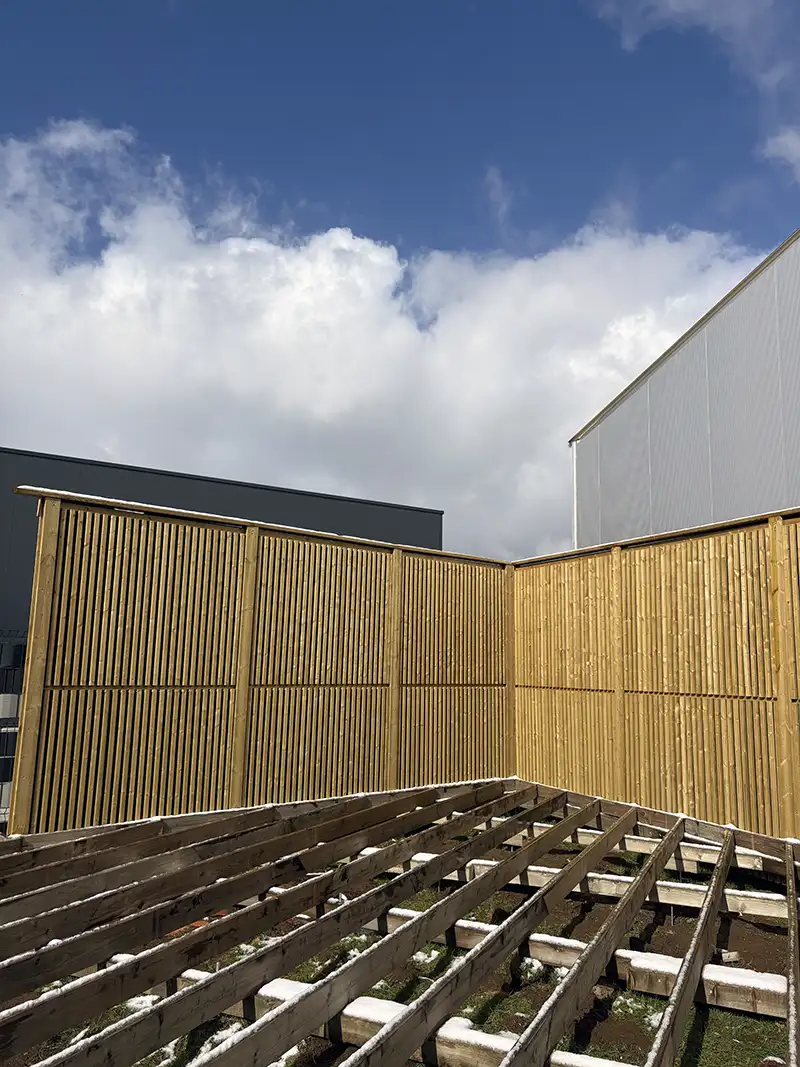

Up to 70% noise reduction
Certified
PEFC

100%
made to measure

10-year
warranty

Made in
Europe
Why your situation determines
the choice of noise barrier
The noise reduction achieved by a noise barrier or acoustic fence depends on several physical factors: the nature of the noise source (road traffic, human activity, industrial equipment), the distance between that source and the receiver, the height of the screen relative to the sound wave propagation line, and the materials used.
An absorptive timber acoustic panel with a high-density polyurethane core does not behave the same way when protecting a private garden 10 metres from a main road as it does for a restaurant terrace in a busy city centre. The optimal height, the type of face (absorptive or reflective), the dimensions per linear metre and the applicable regulations vary case by case.
That is why Akoustys carries out a free acoustic assessment before any proposal: mapping of sound levels, simulation of the barrier effect before/after, and recommendation of the most effective configuration for your specific situation.
Acoustic factor
|
Implications for the solution
|
|---|---|
| Height of the panels | The greater the height, the more the screen blocks sound waves — a recommendation based on the distance from the source |
| Material and density | Wood with a recycled PU core ensures sound absorption and weather resistance — superior acoustic performance |
| Distance from the source | The closer the barrier is to the source (or the receiver), the greater the efficiency |
| Absorbent side vs reflective side | The absorbent side absorbs sound waves; the reflective side reflects them — the two can be combined depending on the environment |
| Specific sources of noise | Traffic noise, neighbourhood noise, industrial noise: each source requires a different level of sound insulation |
Your situation deserves
a custom solution
Our acoustic experts analyse your specific noise sources and recommend the most suitable noise barrier or acoustic fence — free of charge, with no obligation, response within 72h.
Different situations
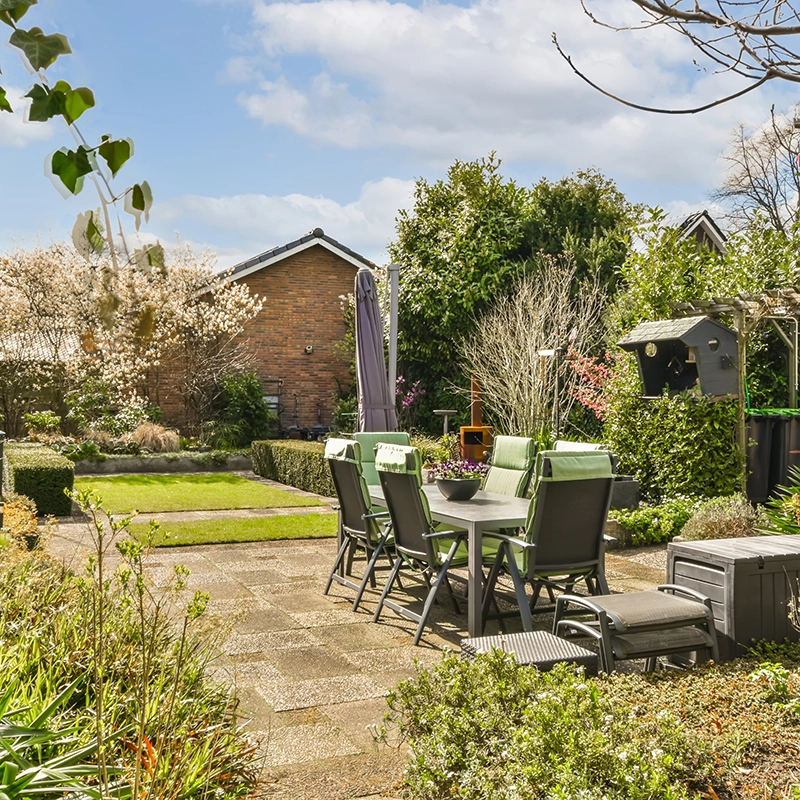
Soundproof fence for private garden and neighbourhood
Residential customers, housing estates, individual houses
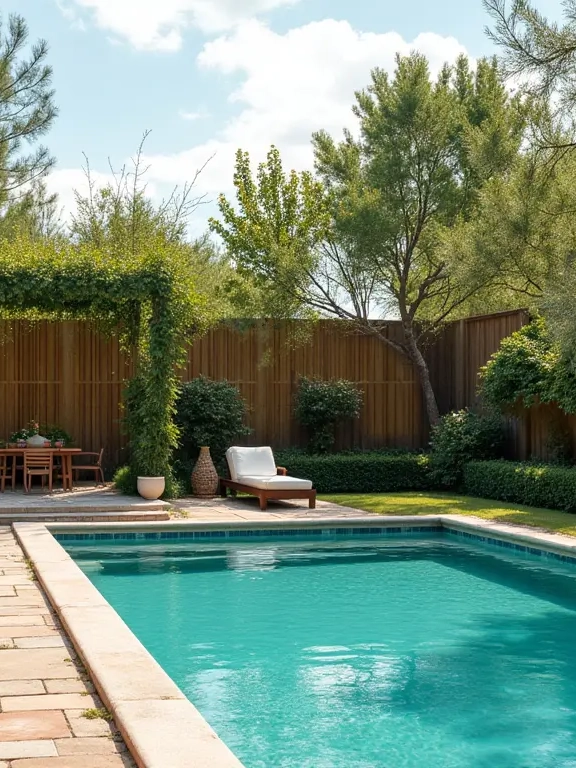
Your garden should be a refuge. Yet noise from traffic, neighbours or thermal equipment (heat pumps, air conditioning) degrades your quality of life on a daily basis. A PEFC-certified timber soundproof fence, designed with a recycled polyurethane foam core, absorbs sound waves and protects your space from prying eyes, without major works or a building permit (subject to local regulations).

Acoustic fence for outdoor hospitality
Campsites, glamping, holiday residences, lodges
In outdoor hospitality, silence is a service. A pitch well insulated from external noise — nearby road traffic, generators, noise between pitches — directly improves guest satisfaction and loyalty. Our timber acoustic panels integrate discreetly into natural environments and withstand the most demanding climatic conditions, including frost, UV and humidity.

Noise barrier for restaurant terrace
Restaurant owners, cafés, hotels with outdoor space
The acoustic comfort of a terrace directly influences the customer experience and revenue. Urban noise — traffic, construction work, commercial surroundings — makes conversation difficult and drives customers away from terraces. A well-designed acoustic screen reduces this noise, visually structures the outdoor space and reinforces the aesthetic identity of the establishment.
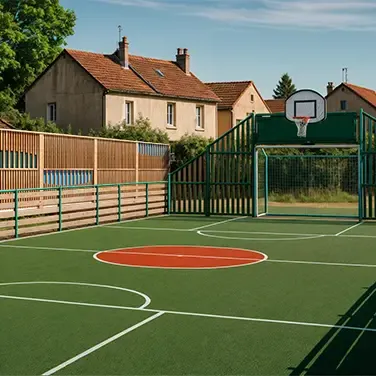
Acoustic panels for sports grounds
Local authorities, sports associations, developers, landlords
Outdoor sports facilities (city stadiums, basketball courts, tennis courts, skateparks) generate significant noise disturbance for neighbouring residents: impact noise (ball bouncing on hard surfaces), shouting and match atmosphere. A heterogeneous gabion-type noise barrier or metal fencing does not offer the same absorption levels as a specific acoustic panel with an absorptive core. Our certified timber solutions combine acoustic performance, perimeter security and aesthetic integration.
Our materials and acoustic technologies
The performance of a noise barrier or acoustic fence relies above all on the quality of its materials and design. Here are the key components of Akoustys panels:
Northern European timber — PEFC-certified pine
Fully treated to the core in class 4 autoclave, our primary material resists insects, fungi, rot and the most severe weather. The wood naturally weathers over time without affecting acoustic performance or structural integrity. Durability 25+ years.
High-density recycled polyurethane (PU) foam core
This material absorbs sound waves with maximum efficiency. Made from recycled materials, it meets our environmental commitments. Our entire range is 100 % recyclable.
Innovative UV-treated weatherproof membrane
The membrane present on absorptive panels protects the acoustic core against pests and external aggressors (UV, humidity, frost). 5-year warranty on this component.
Aluminium and anti-corrosion accessories
The fixing elements, base plates and profiles are made of aluminium or galvanised steel for maximum resistance to corrosion and harsh weather — ensuring a solid and durable installation in any situation.
Two technologies: absorptive face and reflective face
The absorptive face captures and attenuates noise thanks to its high-density core and timber cladding. The reflective face deflects the noise while attenuating it, for directional sound management. These two technologies can be combined depending on your specific situation.
From your situation to your solution
our process


1
Initial assessment
A conversation with our experts to analyse your situation, identify specific noise sources (traffic, neighbours, industrial activity, equipment) and understand your acoustic and aesthetic objectives.
2
Acoustic study and mapping
Evaluation of your sound environment: projection of noise levels before/after installation, mapping on aerial view, simulation of the barrier effect based on height and materials. You visualise the expected gains before ordering.
3
Custom design
3D projections and integration simulations in your environment. Choice of materials, finishes, dimensions (height, linear metres) and fixing method. Every noise barrier or acoustic fence is manufactured to order in Europe.

4
Turnkey installation
Connection with a certified Akoustys partner in your area. Site supervision through to handover. Installation in France, Belgium, Netherlands, Luxembourg and Germany.
FAQ
Frequently asked questions about noise barriers and acoustic fences
What is the difference between a noise barrier, an acoustic fence and a noise screen?
These terms all refer to physical barriers designed to reduce the propagation of sound waves. A noise barrier is generally a fixed structure made of heavy materials (concrete, timber, metal). An acoustic fence combines noise reduction with property demarcation. A noise screen is often used in motorway or industrial settings. At Akoustys, our wooden panels with a recycled PU core fulfil all three of these functions, achieving noise reduction of up to 70 per cent.
What height of noise barrier should I choose, depending on my situation?
The effective height depends on the distance between the noise source and your site, and on the angle at which the sound waves travel. As a general rule: a minimum of H200 for a garden bordering a road, and H250 to H300 for a sports ground or industrial site in the immediate vicinity. Our free acoustic assessment determines the optimum height based on your specific circumstances.
Which acoustic materials are most effective for a noise-reducing fence?
PEFC-certified timber with a core of recycled high-density polyurethane foam offers the best balance between sound insulation performance, weather resistance, aesthetics and cost. Unlike gabions (stones or aggregates in metal cages) or aluminium panels on their own, our panels combine sound wave absorption with a maintenance-free lifespan of over 10 years.
How much does a noise barrier or acoustic fence cost per linear metre?
The cost depends on the range you choose (Essential or Privilege), the height of the panels and the linear measurement of your project. Thanks to our expertise in the production process, our prices are competitive and on a par with those of a top-of-the-range fence, whilst also offering high-performance sound insulation. Request your free, detailed quote within 72 hours.
Are Akoustys acoustic fences weather-resistant?
Yes. Our panels are designed to withstand the most demanding weather conditions: frost, UV rays, rain and wind. The Class 4 autoclave-treated pine timber is resistant to insects, fungi and rot. The corrosion-resistant aluminium fittings ensure the structure remains sturdy over time. A 10-year guarantee covers all components.
Do you need planning permission to install a noise barrier?
This depends on the height and local planning regulations (PLU). In France, prior notification of works is generally required for fences over 1.80 m high. For local authorities and businesses, specific rules apply depending on the type of structure and the zoning classification. Akoustys can assist you with all the administrative procedures.
Do you offer any alternatives to gabion walls or aluminium panels?
Yes. Our PEFC-certified timber acoustic panels offer superior sound insulation performance compared to gabion solutions (which do not absorb sound waves) and a natural aesthetic that aluminium panels cannot match. For situations requiring specific materials (aluminium, recyclable materials suitable for greening), we can explore bespoke solutions.
Does Akoustys operate in Belgium and Luxembourg?
Yes. Akoustys installs its noise barriers and acoustic fencing in France, Belgium, Luxembourg and the Netherlands.